
the aptness of anger
& some work by tracey emin + mark leckey

i thought that when i started my master’s degree, i’d write on here more! ‘you’ll have so much spare time’, i said to myself. unfortunately, this has not been the case.
it turns out that when you start studying art theory, you become painfully aware of how pretty much any remark you can make about a piece of art is intermeshed into a series of assumptions, and then you think fuck i can’t even begin to express my thoughts on this without dwelling for 3-6 months at least! so unfortunately i haven’t written on here since august :( but it’s christmas-time, i have 10,000 words of coursework and two features to procrastinate writing, so i thought that now would be a great time to revive my substack and get some thoughts out on (digital) paper :)
recently i’ve been thinking lots about catharsis in art, and processing difficult emotions, notably anger. when i was still seeing a therapist earlier this year, we spent a lot of time thinking about my stuck anger. i visualised my stuck anger: it’s like a long oval, above my sternum, and it feels solid and brittle, not soft or malleable. i made my stuck anger out of clay, which then ended up snapping in my purse after i forgot that i’d left my stuck anger in there (symbolic?). i discussed the series of revenge fantasies i cycle through while i run. i’m not particularly inventive and they pretty much all involve throwing pints in the faces of various people that have pissed me off, i’m open to recommendations for more exciting premises.
we never really got to the bottom of that stuck anger and how i could unstick it. it started to become more a question of whether anger is actually such a bad thing. my friend ben recommended a paper by philosopher amia srinivasan on the topic, ‘the aptness of anger’. in it, srinivasan argues for a reframing of how we conceptualise anger. she diagnoses the predominant position towards anger as one that suggests that it must always be productive. you tell a friend that you are angry, and they might respond by questioning whether or not this anger is useful for you or your situation. srinivasan suggests that the question we should be asking is not whether our anger is useful, but instead whether or not it is apt for the situation. her bottom line, to summarise, is that anger has a right to exist whether or not it is always useful for us.
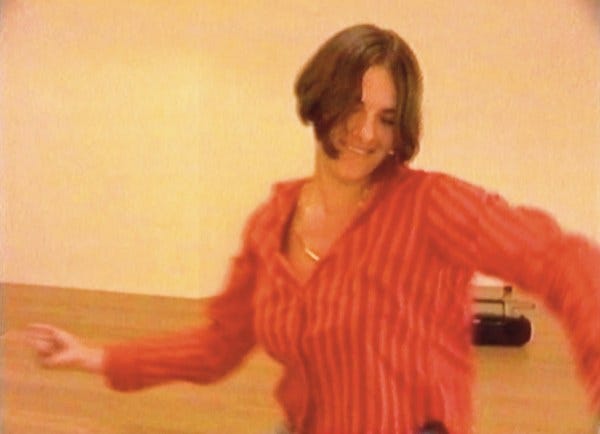
some of my favourite artworks take this right to exist in interesting directions. much to the despair of some of my friends, i am a very big fan of tracey emin’s work in this area, specifically her famous video ‘why i never became a dancer’. it’s about teenagehood, sex, growing up somewhere quite boring, and dance. in it, emin enacts what i read as a little bit of a revenge fantasy, performing a magnificent, embodied dance to sylvester’s ‘you make me feel (mighty real)’. she’s a wonderful dancer, and the first time i watched the video it made me cry. this isn’t in itself that unusual for me––i am capable of crying over all sorts of sometimes ridiculous things––but watching her spin and grin and take the pain and humiliation of her experience and turn it into something glorious moved me in a real way.
and recently, artist mark leckey came to speak in the evening lecture programme that my department at goldsmiths hosts. he took us through mostly his pandemic and post-pandemic work, much of which is heavily inspired by medieval art and is accompanied by these amazing, roaring soundscapes. despite knowing his name, i’d really not known much about leckey’s work before this talk, and i was blown away both by the sheer creativity of it and equally the humility & humour with which he was able to speak about what he’s made.
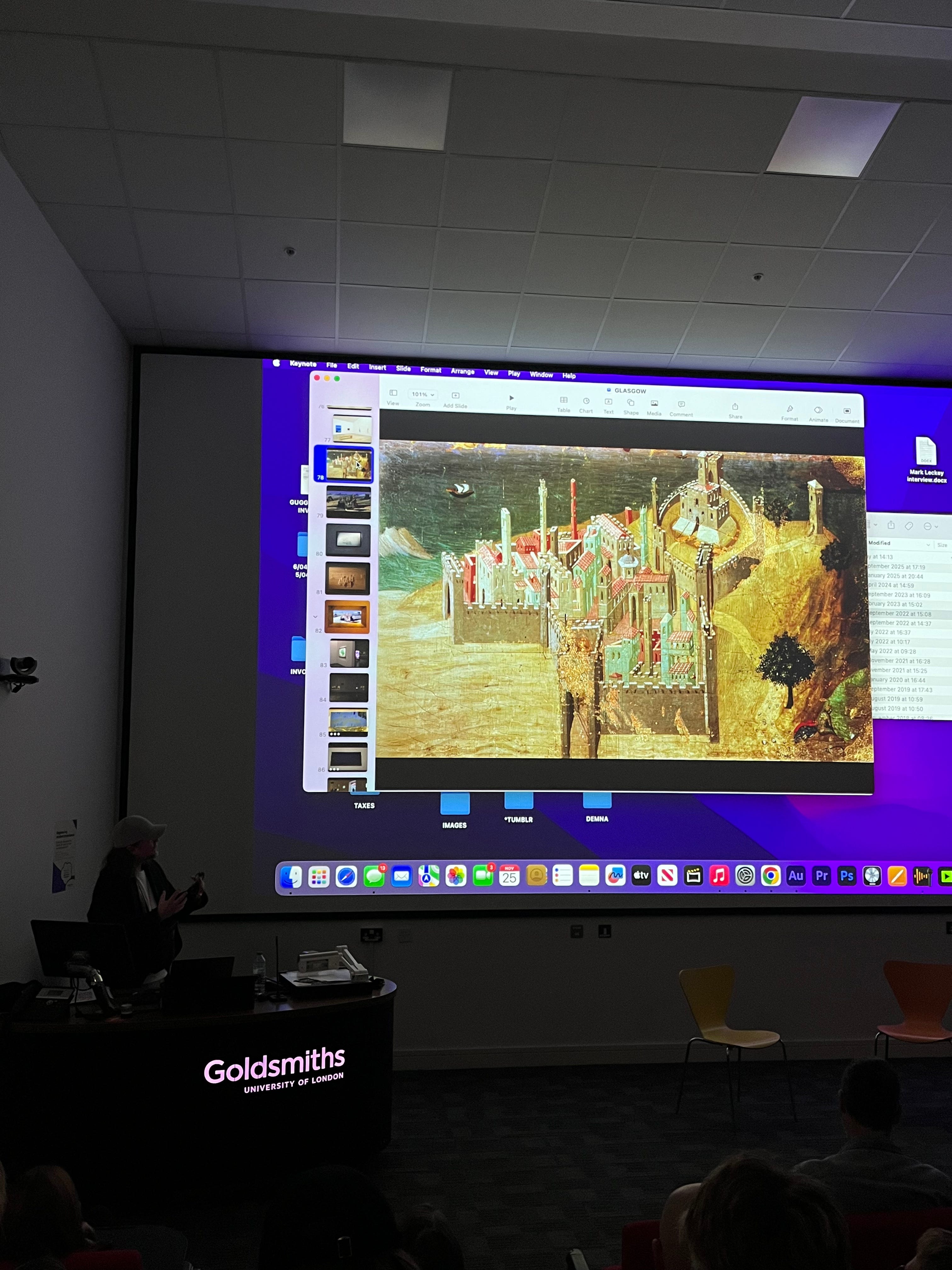
one work in particular feels relevant to bring up here, which is a video leckey made using a recording that he’d taken while having a breakdown (panic attack?) in alexandra palace park. what starts as a simple, stripped back voice-memo style recording––in which you can hear leckey struggling to understand the wave of emotion that’s come over him while taking his baby for a walk––then becomes part of this 3-d landscape, a golden city with castles that feels like you’ve gone inside a medieval painting, or maybe inside heaven. his voice is distorted, and starts to form part of this big overwhelming sonic world. so you start in the mundane, a bad day in alexandra palace park, and then you end up in this weird, unnerving medieval place, soundtracked by mark leckey’s distorted, raging, crying voice.
anger isn’t necessarily at the core of Leckey’s work, but intensity of emotion certainly is. it’s hard to name what he’s feeling in the recording, but it’s undoubtedly a big, overwhelming feeling. what i really loved about the video was how truly unpredictable it felt. it’s not parodic, or overly earnest, and you can really feel his pain. to be able to give that to an audience is a rare and beautiful ability.