on two conceptual art books
Seth Siegelaub's 'One Month' and 'Yvon Lambert, Actualité d’un Bilan'

Salut! I am writing on the train from Paris > Lille, where I will then be getting on my second train back to London thus ending my month of various travels. If you see me wandering the streets of South London, tell me to go back to the library. I’ve had toooo much fun and I need to lock myself into Goldsmiths and finish my thesis. Paris roundup coming soon <3
Today I’m writing about two conceptual art books that I encountered in the last month. I’m stopping short of calling them artist books, because they are both alike in having been put together by curators rather than artists, but I’m interested in both of them as examples of a scene building exercise and as experiments in seeing the book as art object in-and-of-itself.
Seth Seigelaub, One Month (1969)
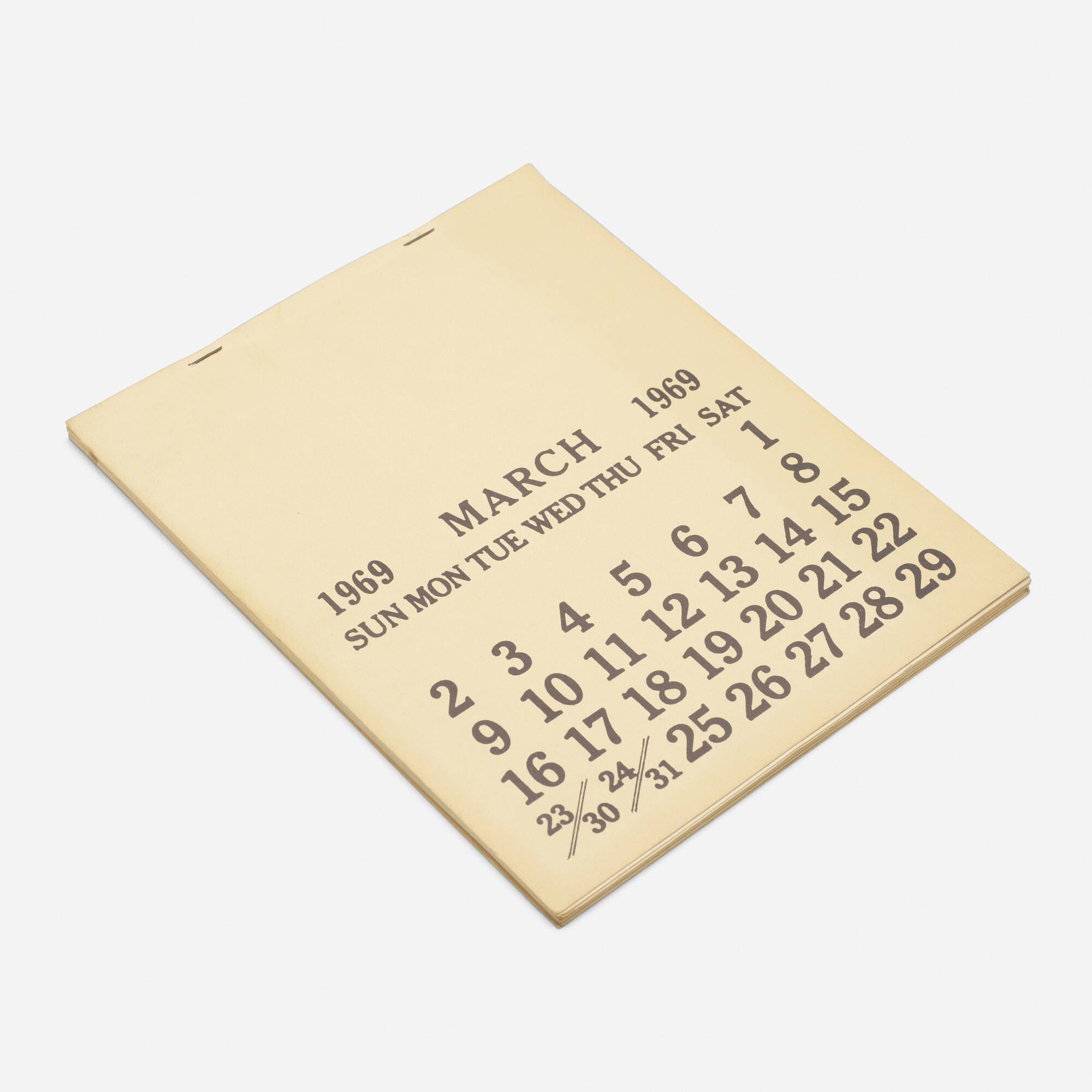
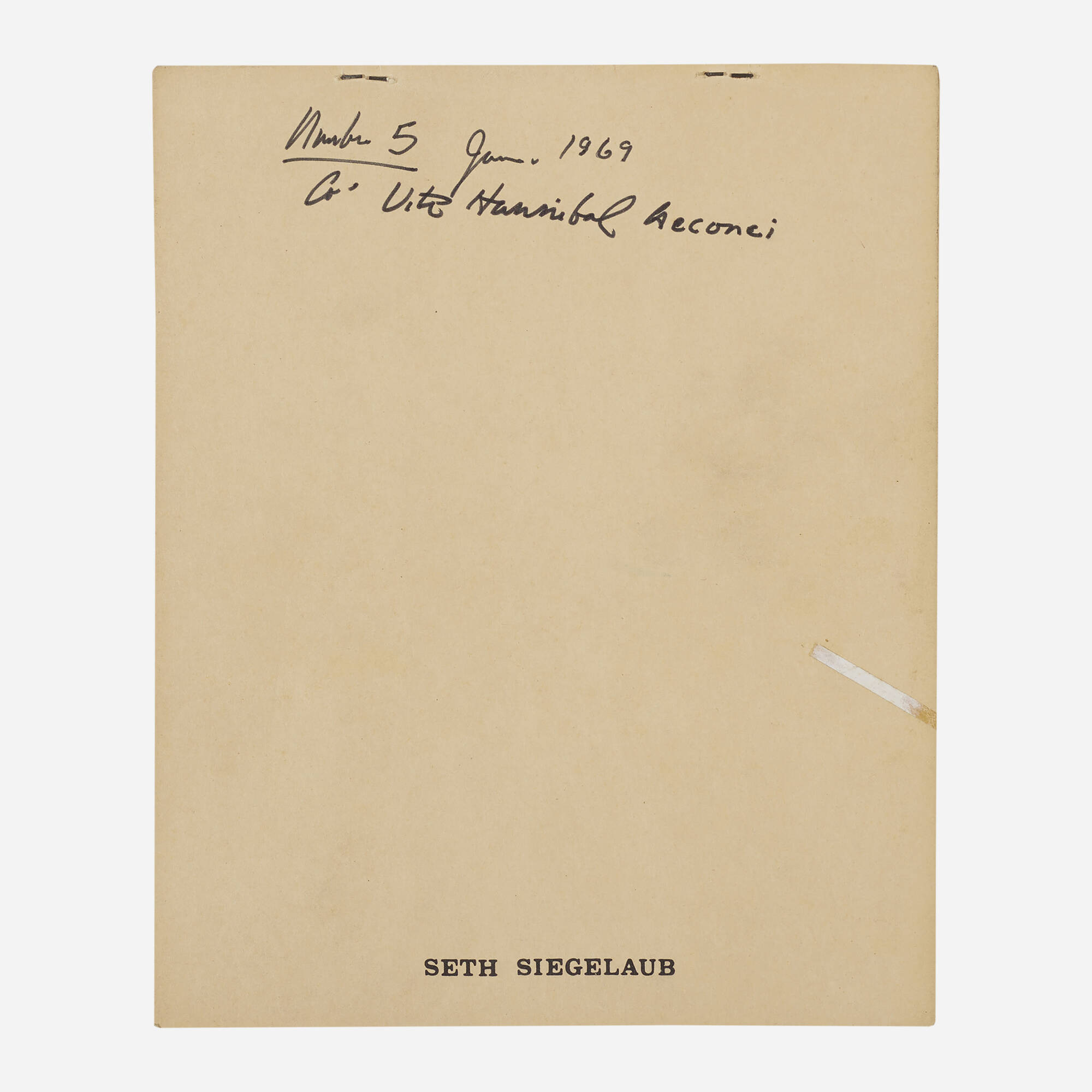
While conducting research for my thesis at the MoMA archives, I spent quite a lot of time looking through Siegelaub’s research files and working notes for his 1969 art-book-slash-exhibition One Month, which you can view a PDF of here.
Playing with the notion of the ideas as the artwork, Siegelaub invited thirty-one artists to propose a work that they would complete on a day that they had been assigned in March 1969. Siegelaub solicited the concepts in the January of that year, and it doesn’t seem that he followed up with any of them to see whether they actually went to go on to make these works.
The proposals included range from charming to highly obtuse. My favourites include John Chamberlain’s response (March 9), where he mailed Seigelaub a letter that he’d received from the Director at Leo Castelli gallery who appears to have damaged one of his sculptures, and Laurence Weiner’s proposal (March 30) to toss an object from one country to another (TBC on logistics, I imagine it would involve travelling to a border). The only documentation I could find in the file were a few photographs of Allen Ruppersberg’s piece happening, where he proposed to walk ‘from daybreak to dark, through the Mojave desert in a predetermined straight line.’
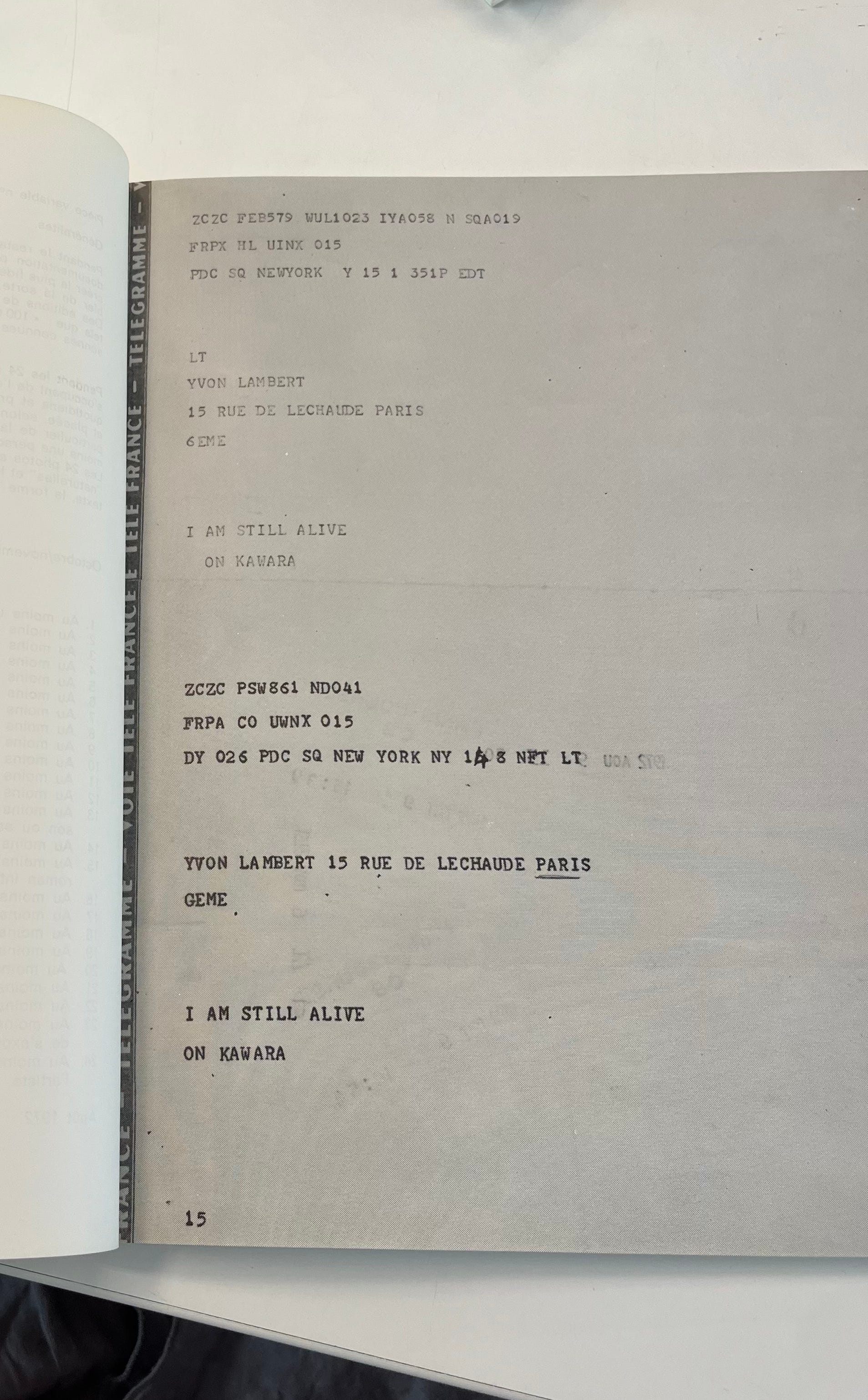
When I first started on the file, I was confused by all of the references to an exhibition, taking the publication as an exhibition monograph or catalogue. I realised quickly that rather than a book accompanying an exhibition, Siegelaub conceived of this book as the exhibition itself. The contents page sort of reads like a who’s who of Western conceptual art, although it also includes sculptors, earthworkers, and installation artists (e.g. Robert Smithson), all working within the language-only form that the book orbits around. It’s also worth noting that the only woman in the contents page is Christine Kozlov (whom, from the planning notes, appears to have been a slightly later addition to the project), and every artist featured except On Kawara (whose page is blank as he didn’t submit in time) is white. In this sense it represents a very narrow slice of what was going on in art at this point in time.
That being said, it’s an interesting and playful proposition. In the planning notes, you can see him trying to figure out how to create a design that lands between wall calendar and art book. At the start of the book, Siegelaub reprints the form that he was using to solicit responses. While this did seem to be part of how he invited artists to participate, there’s also notes from phone calls, telegrams, and postcards. Artists would also often include notes alongside their actual submission, e.g. Stephen Kaltenbach whose typed concept came with a handwritten “P.S. Please disregard the reverse side. I got the @*!!! carbon paper in backward.”
I think that ultimately I’m drawn into this publication as a record of a set of relationships between people at one moment in time, which tends to be what draws me in to just about anything. Siegelaub started out as a dealer and gallerist of books-about-rugs, then a dealer of art-and-sometimes-rugs-and-also-books, becoming interested in alternative exhibition modes and book-as-exhibition in the late 1960s. In a late interview, he discusses his book-collecting practice in the following terms:
“It is not only just possessing books in a materialistic or selfish way but it’s also about making a bibliography, which is a social activity…” Raven Row Interview
I think firstly that this is an inspiring an interesting paradigm to follow in the act of collecting or sharing books: one that sees it as an activity that generates connection, rather than a mode of asset accumulation. To me One Month is a social activity too, one that brings a set of artists of varying fame together in a non-hierarchical framework, allowing ideas to rub up against one another.
Yvon Lambert, Yvon Lambert, Actualité d’un Bilan (1972)


Unlike Siegelaub’s book, this was published to accompany the exhibition celebrating the 5th anniversary of Yvon Lambert gallery, a project that operated from 1966 up until 2014 and hosted many canonical conceptualist artists during its tenure. Yvon Lambert now operates predominantly as an art and photo bookshop with a small gallery space still inhabiting its back room.
It’s unclear to me the extent to which this book replicates exactly what was shown in the exhibition or represents a new set of works: I lean towards the latter, as many of the contributions appear to be designed with the book format specifically in mind. Unhelpfully, I can’t find any photographic documentation of the exhibition that was held, bar the following poster. One of the biggest advantages of artist and art books as form as that they tend to democratise the exhibition format. Rather than being only available to a narrow set of people that are able to attend a show in a limited time period/geographical area, art/artist books can travel far and wide, living further afterlives even when associated with a specific exhibition.
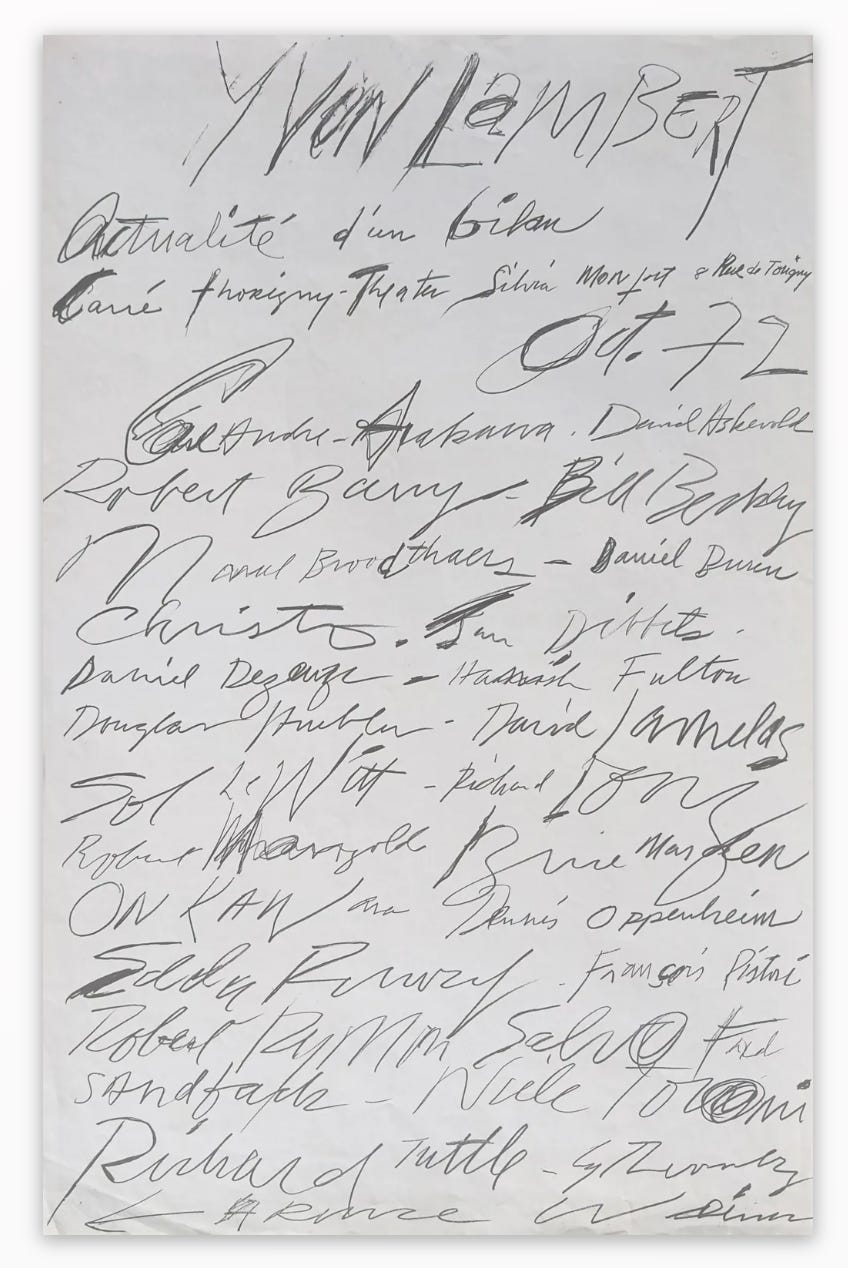
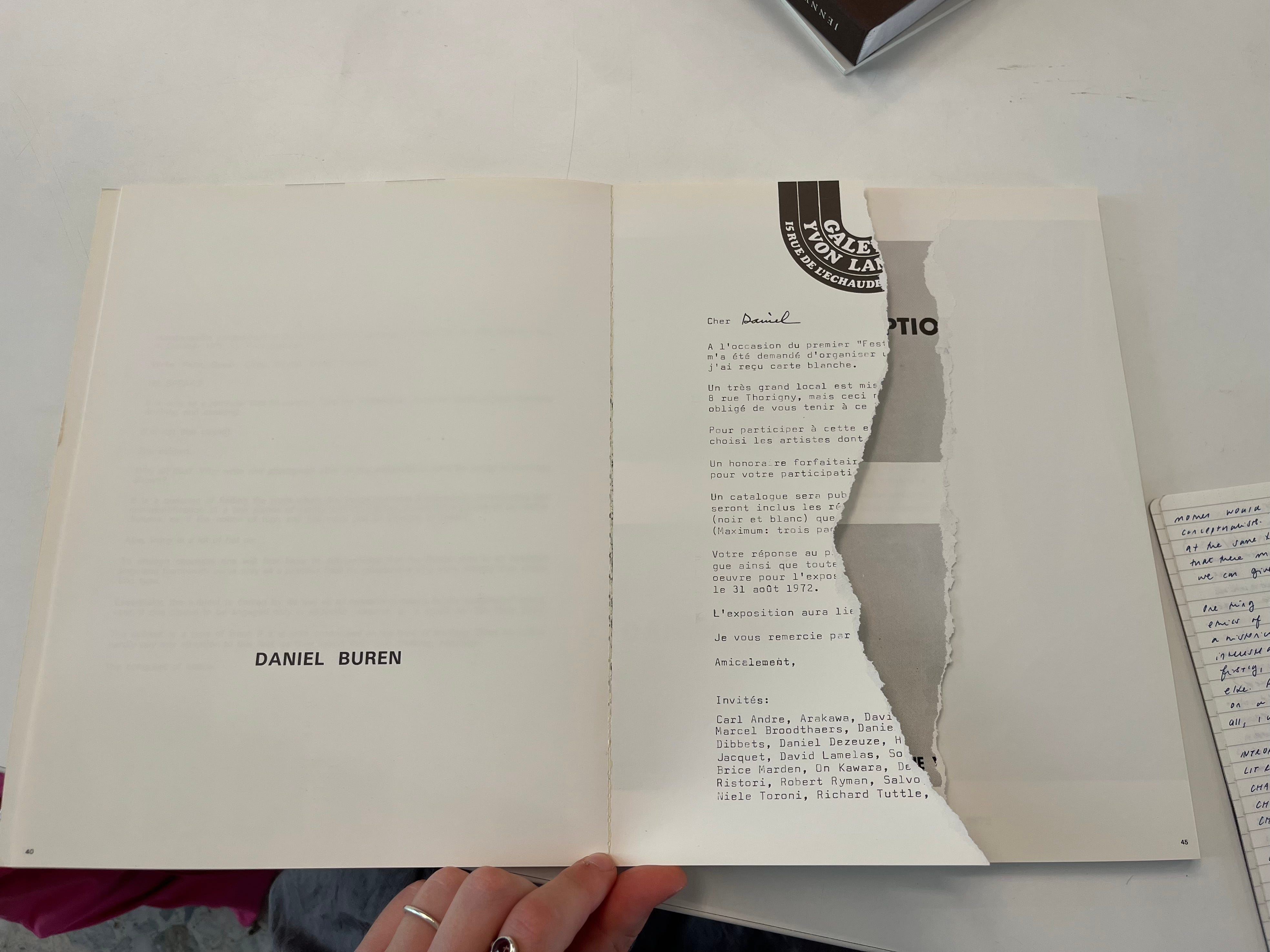
There’s a fair bit of crossover between Lambert’s and Siegelaub’s projects: Carl Andre, On Kawara, Laurence Weiner, Sol LeWitt, and Douglas Huebler were all invited to both projects. What I like about Lambert’s book in comparison to Siegelaub’s is that it’s a bit more free-flowing in form. My favourite contribution by far was Daniel Buren’s, who requested that Lambert’s invitee letter be reproduced as a torn page in each copy. Ever since I’ve been thinking about the complete nightmare this must have posed for the publisher: was it a limited run of copies, each manually torn? Was Buren tearing each one? Could a machine even produce this kind of tear?
This is a limited set of observations informed mostly as a byproduct of the fact that I’m in the weeds of researching a Conceptual artist at the moment. That being said, I’d love to see more examples of book-as-exhibition and group-minded book-making from this period, so if you know of any please drop me a line!